My developer story
I became a developer by trying to make things work better.
I didn't begin with a plan to become a developer. I began with ideas I wanted to put on the web—and problems I wanted to solve.
What started as a simple publishing experiment gradually pulled me into web design, coding, infrastructure, performance, security, SEO, automation, and eventually building applications around real requirements.
Last updated Jul 14, 2026
2020 · Where it started
I just wanted a place to put my ideas online.
My development journey began around 2020 with AlphaZero, a small site I created using Google Blogger to share ideas and things I was exploring.
At first, I cared more about the content than the technology behind it. But making the site look and behave the way I wanted meant opening templates, changing HTML, adjusting CSS, and gradually learning how the page worked underneath the interface.
From a personal site to something larger
One website became a reason to learn more.
AlphaZero began as a place to put my ideas online. As that interest developed, I started NViews, which later became part of NViews Media Private Limited.
Managing more than one web property changed my relationship with the web. I was no longer experimenting with a single Blogger template. I needed to think about publishing systems, branding, structure, maintenance, search visibility, performance, and websites that could grow with real use.
WordPress
Building became easier. Maintaining it became more complicated.
As my requirements grew, I moved from Blogger to WordPress. It gave me more flexibility and made it possible to build different kinds of websites more quickly.
But that flexibility came with another layer of complexity. Features often meant adding plugins. Design changes meant understanding themes and templates. Then came plugin conflicts, updates, security concerns, performance problems, SEO configuration, hosting limitations, and the ongoing work of keeping everything reliable.
The more problems I solved, the more I wanted to understand what was happening beneath the plugins.
Learning the web underneath
Every limitation became something else to understand.
As I encountered problems with design flexibility, plugins, performance, security, and SEO, I gradually moved deeper into the technologies underneath them.
I began with HTML and CSS, then worked more with JavaScript and PHP. From there, the questions expanded into hosting, servers, domains, DNS, Cloudflare, deployment, email infrastructure, security, and the systems that determine whether a website actually works well beyond what appears in the browser.
Much of this learning was driven by practical need. When something was slow, insecure, difficult to maintain, or simply could not work the way I wanted, I tried to understand why instead of only searching for another plugin.
HTML → CSS → JavaScript → PHP → Hosting → Domains → DNS → Cloudflare → Security → Email → Deployment
From configuring to building
Why should every problem become another WordPress installation?
WordPress remains useful, and it taught me a great deal. But over time I realized that I was using the same platform for problems that did not necessarily need the same solution.
Sometimes I needed a content website. Sometimes I needed a small utility. Sometimes I needed structured data, an internal workflow, an API, or a business application.
Instead of asking “Which plugin can do this?”, I started asking “What is the simplest system this problem actually needs?”
AI + development
AI accelerated how I could learn, test, and build.
As coding assistants became more capable, I began incorporating AI into development—exploring approaches, writing and reviewing code, debugging, documenting systems, and moving from an idea to a working implementation more efficiently.
But generating code is not the same as building a reliable system. Architecture, security, data flow, deployment, maintainability, and understanding what the application actually needs still require judgment.
AI became an accelerator—not a substitute for understanding the problem.
Choosing the tool around the problem
The web became a system, not just a webpage.
As my understanding of the wider web stack developed, I began moving beyond conventional CMS-based builds when the problem called for something different.
Astro, Cloudflare, APIs, modern JavaScript and TypeScript, structured data, automation, and custom application architecture gave me more control over performance, maintainability, security, and the way systems fit together.
The goal was never to replace one platform with another. It was to stop assuming that every problem needed the same platform.
The journey
A progression shaped by real requirements.
2020 — AlphaZero
Blogger · first HTML and CSS changes
NViews
From a personal experiment to managing real web properties
WordPress
Themes · plugins · PHP · SEO · performance · security
Web infrastructure
Domains · DNS · hosting · Cloudflare · email · deployment
AI-assisted development
Planning · coding · debugging · review · iteration
Modern development
Astro · TypeScript · APIs · structured systems
Applications and operations
Developer tools · workflows · ERP · business systems
Today — NViews Web Digital Solutions
Professional digital work built around real requirements
Building for real use
One project led naturally to the next.
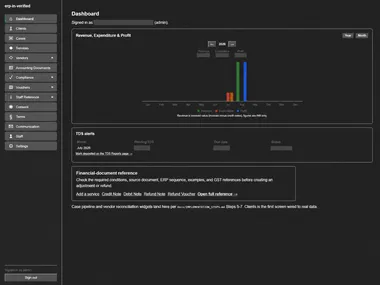
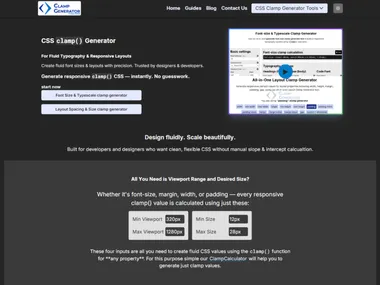
Today, my work ranges from public websites and developer tools to internal business systems built around real operational requirements.
I do not see that as a departure from where I started. Each stage came from encountering a limitation, understanding it more deeply, and learning enough to build a better solution.
Research + development
Two kinds of work. A similar way of thinking.
My background in scientific research has shaped the way I approach technical problems.
In research, I observe a problem, identify variables and constraints, test possibilities, examine failures, and refine the next experiment.
Development often works the same way for me: understand the actual requirement, identify what is failing or missing, test possible approaches, and build toward something that works reliably.
I don't consider myself a developer because I know a particular framework. I consider development another practical way of solving problems.
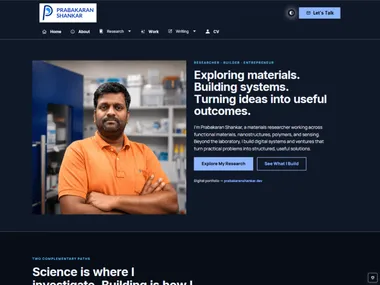
Research profileWhere research meets the web
One problem is particularly close to me.
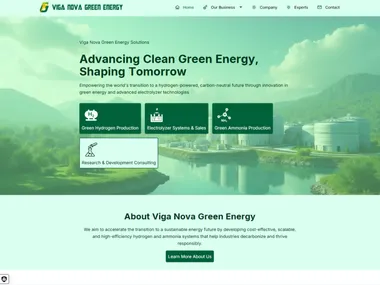
Working in research has shown me how fragmented a researcher's digital identity can become—an institutional profile in one place, publications somewhere else, projects elsewhere, and important expertise buried inside papers.
That has made me increasingly interested in building better digital systems for researchers and academic laboratories: websites that organize research identity, expertise, publications, projects, and contributions so they are easier for people, search engines, and emerging AI systems to understand.
Commercial digital work
What started as experimentation has become professional work.
What began with AlphaZero and Blogger gradually developed through NViews, WordPress, web infrastructure, modern development, and AI-assisted coding into the work I do today.
This digital work is now moving under NViews Web Digital Solutions Private Limited, an India-based company focused on websites, web applications, digital infrastructure, and practical systems built around real requirements.
I currently live in South Korea and continue building and managing digital projects while working across research, technology, and business.
Prabakaranshankar.dev is my personal developer portfolio. NViews Web is where that experience becomes commercial digital work.
Visit NViews WebCurrently
What that journey has grown into.
Web development
Astro, HTML, CSS, JavaScript, TypeScript, responsive design, and component-based development.
Applications
Developer tools, internal applications, workflow systems, and business software.
Infrastructure
Cloudflare, domains, DNS, hosting, deployment, email infrastructure, security, and performance.
Discoverability
Technical SEO, structured data, content architecture, and machine-readable web information.
AI-assisted development
Planning, coding, debugging, review, documentation, and iteration—with final decisions grounded in the real requirement.
The stack will continue to change. Learning how to understand the problem is more durable.
Continue exploring
The best proof is what I've built.
The journey started with a Blogger template. The portfolio shows where it has taken me.